Exploring the Competitive Edge of Basketball Club Teams San Diego
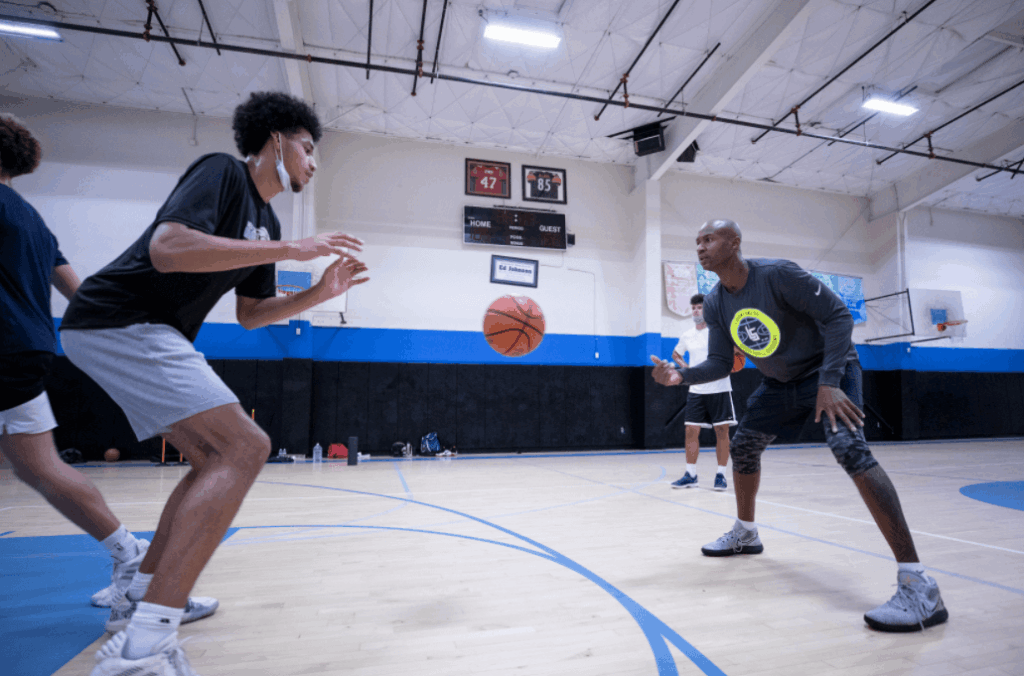
San Diego has never needed help attracting athletes. The weather keeps gyms busy year-round, the population base is large enough to support real competition, and the region sits close to other strong basketball markets in Southern California, Arizona, and Nevada. What makes the local scene especially interesting, though, is not just the number of players. It is the way club basketball in the area has become a proving ground for serious development.
Families looking at Basketball Club Teams San Diego often start with the obvious questions. Will my child get better? Will the competition be strong? Is the cost worth it? Those matter, and any honest evaluation has to address them. But the true competitive edge of club basketball in San Diego runs deeper. It lives in the structure of training, the density of talent, the travel ecosystem, the caliber of coaching, and the daily demands placed on players who want to move beyond recreational play.
I have spent enough time around youth basketball environments to know that a logo alone means very little. A sharp uniform, a busy social feed, and a packed tryout do not guarantee progress. What separates good club programs from average ones is what happens in ordinary weeks, on random Tuesdays in the gym, when no one is posting highlights and no trophies are on the table. In San Diego, the strongest clubs understand that edge is built there.
Why San Diego produces serious club basketball
A city can have plenty of teams without having a healthy basketball culture. San Diego is different because the basketball calendar rarely goes quiet. Players move from school ball to spring club tournaments, into summer showcases, then right back into skills sessions, fall leagues, and preseason work. That continuity matters. It gives committed players a chance to stack months of meaningful reps instead of starting over each season.
Geography helps too. San Diego players have access to local competition, but they are not isolated. Within a manageable travel radius, teams can test themselves against high-level programs from Orange County, Los Angeles, the Inland Empire, and beyond. That creates a better feedback loop than many families realize. A player can dominate a local gym and still get exposed quickly against longer, faster, more disciplined opponents on the weekend. That gap, while uncomfortable, is often where real growth starts.
The climate has a practical effect as well. Outdoor courts stay active for much of the year. Conditioning work is easier to plan. Recovery routines can be more consistent. That sounds minor until you compare it with regions where winter weather disrupts training for weeks at a time. San Diego athletes often get more touches, more movement, and more opportunities to train without interruption.
There is also a cultural factor. Multi-sport athletes are common in the area, and while specialization has become more prevalent, many club players still bring athletic versatility into basketball. You see guards with soccer footwork, wings with volleyball timing, and forwards who understand space because they have played other sports. Good clubs know how to sharpen those traits rather than coach them out.
The real difference between rec basketball and club basketball
The leap from recreational leagues to club play can surprise families. In rec settings, the game is often organized around access and participation. In club basketball, the environment changes. Practices are faster. Expectations are higher. Playing time is less automatic. Skill deficiencies that were hidden before become obvious quickly.
That shift is not a flaw. It is the point.
A well-run club team gives players exposure to basketball that demands decisions under pressure. Spacing matters more. Defensive mistakes get punished. Weak ball handling shows up against traps and pressure. Conditioning becomes visible by the second half of the second game in a single day. For players with ambitions to contribute in high school varsity programs, and certainly for those hoping to attract college attention later, these are necessary realities.
In the San Diego market, that jump can be especially sharp because the best teams are not playing a soft schedule. Many Basketball Club Teams San Diego actively seek tournaments where they will be challenged. The strongest directors know there is little value in collecting easy wins all spring if the goal is to prepare players for meaningful school seasons and recruiting windows.
One parent once described club basketball to me as "the first time my son found out what he could not do." That was not a criticism. It was one of the healthiest things that could have happened to him. Within two months, he tightened his handle, improved his defensive stance, and started watching film with a purpose. Rec basketball had boosted his confidence. Club basketball gave it shape.
Coaching is the first real separator
When people talk about strong club programs, they often focus on tournament results. That is understandable, but it misses the first point of evaluation. The quality of coaching is still the clearest predictor of player development.
A strong coach in this setting does much more than design out-of-bounds plays. They manage tempo in practice. They teach reads instead of memorized patterns. They know when a player needs hard correction and when that same player needs a quieter conversation after practice. Most importantly, they understand the difference between winning youth games and building older, more complete players.
In San Diego, the better clubs often have coaches with mixed backgrounds. Some come from high school programs, some from college support staffs, some from long competitive playing careers, and some from years of grassroots development work. That blend can be useful if the program is aligned. The danger comes when coaches chase short-term wins by leaning on one or two advanced players while everyone else stands and watches. That team may win in May and leave half the roster underdeveloped by August.
The strongest environments coach habits relentlessly. Closeouts are done with urgency. Defensive shell drills are taken seriously. Ball movement is not a slogan. Weak-side positioning is corrected every session. Conditioning is tied to basketball actions rather than punishment for its own sake. Those details may look boring from the bleachers, but they are exactly where competitive advantage is built.
Families should also pay attention to communication style. Good coaches are usually direct, but direct is not the same as chaotic. Constant yelling can create the illusion of standards. It can also mask poor teaching. In the best gyms, the loudest moments usually happen around effort and focus, while the teaching moments are clear, specific, and repeatable.
The talent concentration changes everything
One overlooked reason club basketball in San Diego can be so effective is the concentration of talent in practice. Games matter, but daily competition inside the gym often matters more. A player who trains every week against equal or better athletes develops differently from one who is always the best player in the building.
That internal pressure improves timing, resilience, and decision-making. It exposes bad habits early. A lazy pass that worked against weaker defenders becomes a turnover. A loose dribble gets ripped. A late rotation gives up a clean corner three. Those moments sting, but they also accelerate learning.
This is why roster construction matters. Some clubs try to gather the most individually talented players they can find. Others build more balanced teams with clear roles and strong chemistry. There is no single formula, but the best Basketball Club Teams San Diego usually get one thing right: they create practices where no player can coast.
I have seen mid-level prospects make dramatic jumps simply because they spent a spring guarding a stronger teammate every day. Their confidence did not come from praise. It came from survival, then competence, then pride. That is one of the hidden advantages of a competitive roster. Development becomes unavoidable.
Exposure matters, but not in the way many people think
Club basketball conversations often drift toward recruiting, and that can distort priorities. Exposure is real. Tournament circuits, showcase weekends, and school evaluation periods create opportunities for players to be seen. But exposure without substance is just visibility. Coaches notice production, athletic tools, basketball IQ, consistency, and body language long before they care about branding.
For most youth players, the immediate value of club basketball is not direct college recruitment. It is preparation. It prepares them for stronger school competition, for varsity expectations, for role clarity, and for a more realistic understanding of where they stand. If college opportunities come later, they usually grow out of that foundation.
San Diego is well-positioned here because teams can access events with broad regional pull. A player may compete locally one weekend, then face nationally recognized programs the next. That range matters. It helps coaches place players honestly. It also helps families see whether a current club is scheduling with ambition or hiding in weak brackets.
There is a practical truth that deserves saying clearly: not every player needs maximum travel and nonstop showcases. For some athletes, especially younger ones, a strong local development model is better. Fewer flights, more practices, smarter game selection, and better recovery can beat a flashy schedule. The edge comes from fit, not hype.
The developmental benefits are tangible
When club basketball is done right, player growth is easy to spot over a season. It shows up in footwork first, then in pace, then in confidence. Players learn how to operate in tighter windows. They stop dribbling into crowds. They use angles better. They communicate earlier on defense. Their body language improves because they understand what the game is asking of them.
The best gains are often subtle. A young guard learns to get off the ball sooner and relocate instead of overdribbling. A big learns to seal earlier in transition rather than arriving late and calling for the ball from a dead position. A wing learns to tag the roller and still recover to the shooter. None of that creates instant social media attention. All of it wins better games.
There is another benefit that coaches value and parents sometimes underestimate: adaptability. Club players regularly face different officiating styles, gym environments, opponents, and schedules. They learn to play at 8 a.m., late at night, after a close win, after a tough loss, and on tired legs. That unpredictability builds composure. It teaches players to adjust without excuses.
For athletes aiming to play high school basketball at a strong level, these experiences matter. Coaches want players who understand team defense, accept coaching, and can perform without needing ideal conditions. Club basketball provides repeated tests in exactly those areas.
The trade-offs families should consider
It would be dishonest to paint club basketball as purely beneficial. There are real trade-offs, and smart families weigh them before committing.
Cost is the most obvious. Club fees, uniforms, tournament entries, travel, hotels, meals, and private training can add up quickly. In some cases, families spend thousands across a season. That financial reality should never be minimized. A program must offer real value in coaching, organization, and competition if it expects that level of investment.
Time is the second major factor. Weekends disappear. Schoolwork needs stronger planning. Recovery becomes important, especially for multi-sport athletes or players managing growth-related soreness. Burnout is not a myth. It usually arrives quietly, through constant scheduling, emotional fatigue, and the pressure to perform every time out.
Playing time can also create friction. Club basketball is competitive, and coaches often prioritize lineups that can win games. That can be useful for development, but it can also frustrate families who expect equal rotations. The key is transparency. Go to the website If a coach is honest about roles, expectations, and what a player needs to earn more minutes, trust can survive difficult weekends.
The final trade-off is strategic. More basketball is not always better basketball. A player who plays too many games without skill work may become efficient only at repeating existing habits. Strong clubs understand this and balance competition with teaching. Weak clubs often do the opposite.
What separates the best programs from the crowded middle
The San Diego area has enough basketball interest that families can feel overwhelmed by choice. Not every club serves the same athlete, and not every team with a good record is developing players well. The strongest programs usually reveal themselves through patterns rather than promises.
A good sign is consistency across age groups. If a club teaches the same defensive principles, spacing concepts, and standards from younger teams through older teams, players develop inside a real system. Another sign is honest placement. Smart clubs do not just chase roster numbers. They place athletes where they can compete and improve, even if that means difficult conversations.
It is also worth studying how a club handles adversity. Does the staff blame officials, complain about schedules, and panic after losses? Or do they teach from those moments? Culture shows up fastest when things go wrong. In my experience, the healthiest programs are not the ones that never lose. They are the ones that remain organized and demanding when they do.
Families evaluating Basketball Club Teams San Diego should pay close attention to practical details that reveal professionalism:
- Practice quality, including pace, teaching clarity, and how much inactive standing around players do.
- Roster size, because development becomes difficult when too many players compete for too few meaningful reps.
- Tournament selection, especially whether the team seeks appropriate challenge rather than easy records.
- Communication from coaches and directors, including honesty about costs, scheduling, and player roles.
- Player progression over time, which is often a better indicator than any single weekend result.
That short checklist tells you more than a polished website ever will.
The role of parents in a competitive club environment
Parents can help or hurt the club experience more than they realize. The athletes who benefit most from club basketball usually have support systems that are stable, not noisy. They get encouragement, structure, and perspective. They do not get a full postgame breakdown in the car after every turnover.
Competitive basketball creates emotional swings. One weekend a player may look dominant. The next weekend they may struggle against size, speed, or stronger decision-making. Parents who understand development treat both weekends as useful information. They ask better questions. Was the player engaged defensively? Did they compete? Did they respond well to coaching? Did they show progress in one or two key areas? That mindset tends to produce healthier long-term outcomes.
The hardest lesson for many families is that growth is rarely linear. A player may improve in practice for weeks and still not see immediate statistical reward in games. Another may earn fewer shots because the level has increased, even as their overall game gets sharper. Club basketball often exposes that difference between visible success and actual development.
The best parent behavior is usually simple. Show up. Be on time. Support the team. Let coaches coach. Help your child recover, sleep, eat well, and keep perspective. That sounds plain, but in competitive environments it is surprisingly rare.
Why San Diego remains an appealing market for ambitious players
San Diego continues to appeal to serious basketball families because it offers a blend that is hard to find in one place. There is enough talent to force growth, enough access to larger regional events to test that growth, and enough year-round activity to sustain it. For the right player, that combination is powerful.
It is also a market where different types of athletes can find a lane. Not every player is on an elite national track. Some need strong local competition and skill development. Some need role-specific coaching before they are ready for bigger stages. Some late bloomers simply need time, maturity, and the right practice environment. A healthy club ecosystem makes room for those differences.
That flexibility may be the most underrated competitive edge of all. Strong Basketball Club Teams San Diego do not just chase the already polished player. They identify who can improve, who can handle coaching, who can compete through mistakes, and who will grow over the next year rather than the next highlight clip.
For players with real ambition, club basketball in San Diego can be a sharp accelerator. It raises standards. It shortens the feedback loop. It puts athletes in front of better competition and clearer truth. That truth is not always comfortable, but it is useful. And in serious development, useful beats comfortable every time.
The edge, then, is not magic. It is built through strong coaching, demanding practice habits, meaningful competition, honest evaluation, and families willing to value growth over image. In a region where basketball opportunities are abundant, that combination is what turns participation into progress.
Lamont Smith Basketball Academy
888 Clairemont Mesa Blvd Suite T-2, San Diego, CA 92123
(619) 639-8778
FAQ About Basketball Club Teams San Diego
How can a player join an LSBA club team?
Players are evaluated during practices so the coaching staff can recommend an appropriate team and development level. Families should contact the academy to confirm current openings and evaluation details.
Are club teams available for newer basketball players?
Yes. LSBA describes multiple levels, including a developmental option for newer players as well as more competitive teams for athletes with prior club experience.
What do LSBA club team practices emphasize?
Practices emphasize basketball fundamentals, team defense, structure, communication, and player development. The specific focus may vary according to the team and experience level.
Do all LSBA teams travel?
Travel expectations vary by level. Some teams focus on local competition, while advanced teams may participate in tournaments elsewhere in Southern California or beyond. Families should confirm the current schedule before enrolling.