Basketball Club Teams San Diego and the Journey to Higher-Level Play
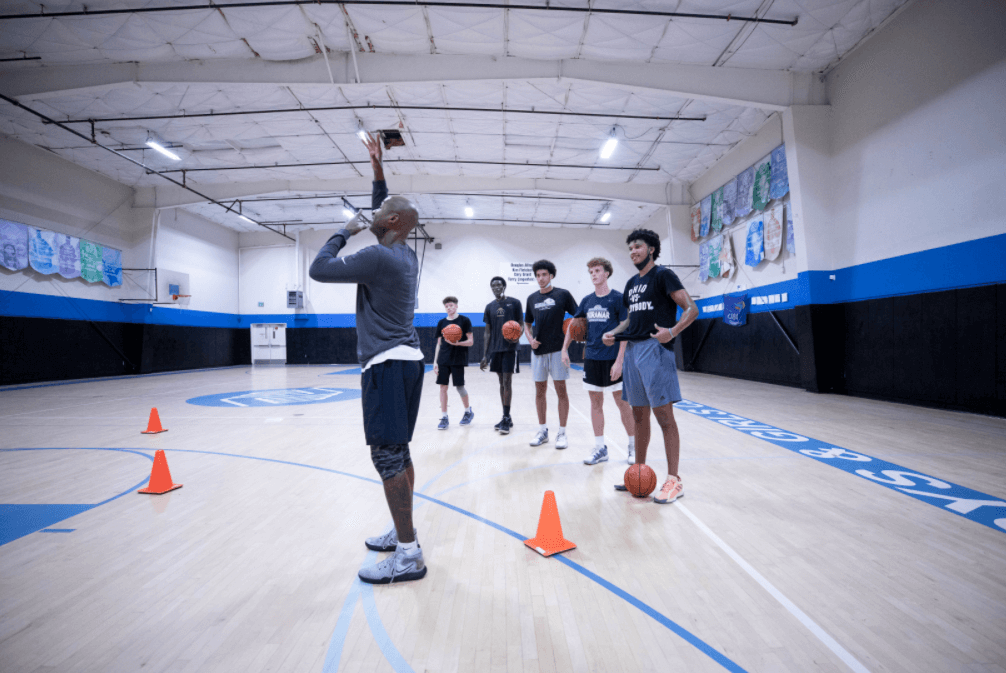
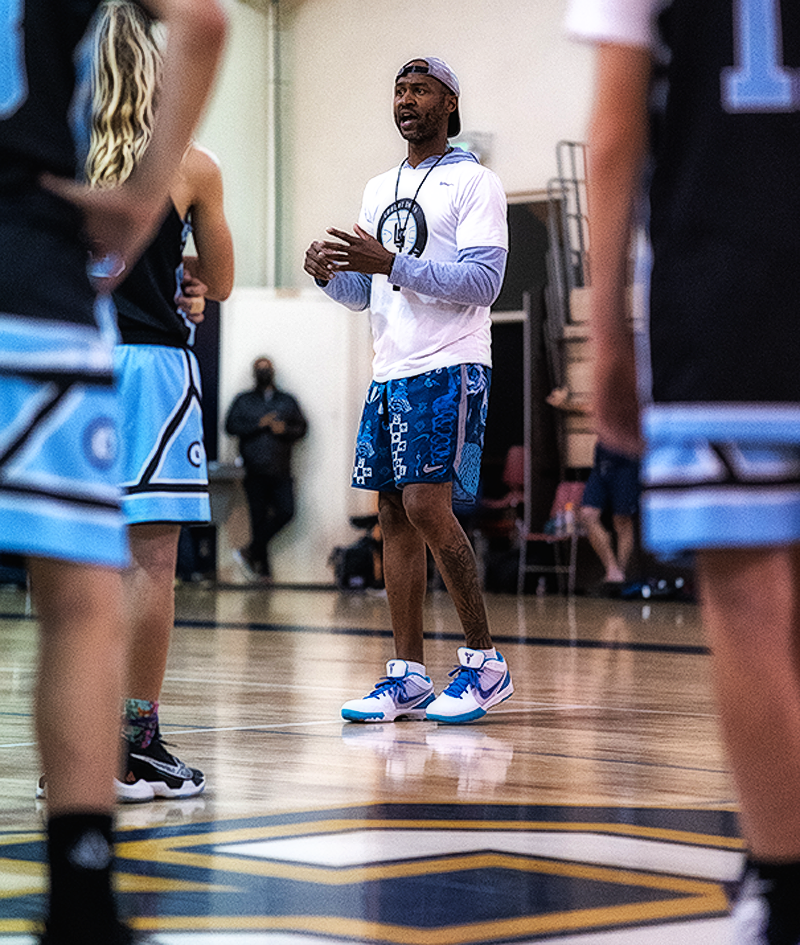
San Diego has never had trouble producing athletes. The weather helps, the gym culture is strong, and the region gives young players access to quality coaching nearly year-round. Basketball, though, asks for more than access. It asks for repetition, restraint, patience, and a level of competition that exposes every shortcut. That is where club basketball becomes so important.
For families looking at Basketball Club Teams San Diego, the real question is rarely just which team has the nicest uniform package or the busiest social media page. The better question is what environment actually helps a player move from being talented in a local gym to being prepared for high-level high school basketball, college recruiting, and the demands of the game as it gets faster and less forgiving.
Club basketball can be a bridge to that next level, but only when the fit is right. A strong club experience sharpens decision-making, toughens habits, and puts players in front of opponents who do not care what they averaged in a recreational league. A weak one can burn money, burn weekends, and teach bad basketball dressed up as exposure.
Having spent enough time around youth and grassroots basketball, one pattern becomes obvious. The players who rise are not always the earliest stars. They are often the ones who find the right level of challenge at the right time, then stay in the work long enough for their game to catch up to their ambition.
Why club basketball matters in San Diego
San Diego is a competitive youth sports market, but basketball has a unique ecosystem. A good high school season can raise a player’s profile, but the club circuit often determines how quickly that player learns to handle length, speed, physicality, and role definition. In school ball, a talented player might get by on being stronger or more aggressive than everyone else in the gym. On the club side, especially in serious tournaments, every team usually has two or three players who were the best player somewhere else.
That change matters.
A young guard who can dribble through pressure in a local league may suddenly struggle against a disciplined trapping defense from Orange County or Los Angeles. A forward who scores easily around the rim may find that everyone in the paint has the same frame and better timing. A shooter who gets comfortable in warmups may discover that real game speed takes away half the shots they thought were open. These are not setbacks in the bad sense. They are useful truths.
San Diego also sits in an interesting position geographically. It has enough internal talent to support strong club programs, but it also lives in the shadow of larger basketball markets in Southern California. That creates a healthy tension. Local players can develop at home, yet the standard remains high because comparison is unavoidable. If a team from San Diego wants respect beyond the county, it has to earn it against deep, seasoned competition.
For the right player, that is a gift.
What separates a good club team from a busy one
Some programs stay active all year and still do not develop players well. Activity is not the same as structure. A good club team knows exactly what it is trying to build. You can feel it in practice. Warmups have purpose. Coaches correct details. Possessions are discussed with specificity, not vague encouragement. Players are held accountable for timing, spacing, help-side defense, shot selection, and body language.
A busy team often looks impressive from the outside. It travels often. It posts a lot. It enters event after event. Yet the basketball can feel loose and improvised. The offense becomes five players taking turns. Defensive mistakes go unaddressed if the team wins anyway. A physically advanced player might dominate for a season without expanding any actual skill. Then the level rises, and that edge disappears.
The difference usually shows up in the small moments. Watch how a team handles dead-ball situations. Notice whether players know where to stand on baseline out-of-bounds sets. Pay attention to whether the bench understands the action or just reacts emotionally. See if timeouts produce better execution or only louder volume. Strong programs are rarely accidental.
Parents sometimes focus first on the roster talent, which makes sense. Everyone wants their child around good players. But coaching quality often matters more than current star power, especially for players between ages 11 and 16. A talented roster can hide stagnation. A demanding coach can create growth even on a roster without obvious stars.
The player who benefits most from club basketball
Not every athlete needs the same path. Some young players thrive in a high-travel, highly competitive national schedule. Others need one or two years in a regional setting where they can make mistakes, play meaningful minutes, and build confidence before jumping levels. One of the biggest mistakes families make is choosing status over fit.
The player who benefits most from club basketball is usually the one ready to be stretched. That does not always mean the best player. It means the player willing to hear hard coaching, accept a role, and keep working when touches are fewer and mistakes are punished faster. Club basketball exposes entitlement quickly. It also reveals maturity.
I have seen undersized guards become legitimate varsity contributors because club basketball forced them to speed up their reads and tighten their handle. I have seen bigs who lived near the basket learn to defend in space, hedge a screen, and make the simple pass on the short roll. I have also seen players with obvious scoring ability plateau because their club environment kept feeding the parts of the game they already liked instead of attacking the parts they avoided.
Higher-level play is not just more difficult. It is more honest.
Skill development versus exposure
This is where many families get tripped up. Exposure sounds glamorous because it points toward college basketball, and for older players with real recruiting potential, exposure matters. But exposure without readiness does very little. Coaches at the next level notice who can play, not just who showed up.
For younger players, development should dominate the conversation. That means practices with teaching, games against strong competition, and enough role clarity that a player can actually improve rather than just survive. If a 13-year-old plays five games in a weekend but spends most of them standing in the corner while older or stronger teammates freelance, it may feel advanced, but the developmental return can be thin.
There is a right time to chase tougher events, more visible circuits, and recruiting weekends. Usually, that time comes after a player has built a reliable base. Ball handling under pressure, footwork on defense, finishing through contact, shooting mechanics that hold up when tired, and an understanding of how to move without the ball, those are the currencies that travel.
When families ask whether a team is good for exposure, I tend to ask a different set of questions. Does the player get coached? Are they improving month to month? Can they handle the pace? Are they learning to contribute to winning basketball? If the answer is yes, the exposure piece becomes far more meaningful later.
The cost is real, so the return should be too
Club basketball is not cheap. Between tuition, uniforms, travel, event fees, hotels, food, and missed weekends, the commitment adds up quickly. Depending on the program and schedule, families can spend from the low thousands to much more over the course of a year. That does not automatically make it a bad investment. It does mean the decision deserves more scrutiny than it sometimes gets.
A family should be able to explain what they are paying for in concrete terms. Not hype, not vague promises, but actual basketball value. Maybe it is a coach with a proven teaching track record. Maybe it is a schedule that balances development with real competition. Maybe it is a culture that teaches accountability and prepares players for varsity expectations. Those are tangible returns.
The trouble comes when families confuse busyness with progress. More tournaments do not always equal more growth. More travel does not always equal stronger competition. And a well-known name does not guarantee a healthy team environment.
Sometimes the best season a player has is not the season with the farthest travel. It is the one where practice intensity improves, confidence stabilizes, and a few core skills finally become dependable.
How to evaluate Basketball Club Teams San Diego without getting sold
Programs know how to market themselves. Some do it honestly, some more aggressively. The easiest way to evaluate a club is still the oldest one, watch closely.
Attend a practice if possible, not just a game. Games show emotion and results. Practices show values. Watch whether coaches teach or simply direct traffic. Listen to the language. Strong coaches correct without humiliating. They are demanding, but clear. They can explain why a player should reject a screen, relocate after a pass, or tag the roller early. Empty gyms reveal real standards.
It also helps to watch how different players are treated. Many teams look fine when dealing with their top scorer. The true culture appears in how they handle the eighth player, the late developer, the kid who makes the same rotation mistake twice in ten minutes. Respect should not depend on a player’s scoring average.
Here are a few practical signs that a program is worth serious consideration:
- Practices are organized, competitive, and instruction-heavy.
- Coaches can clearly explain roles, expectations, and development goals.
- Players improve over the season, not just the already talented ones.
- The competition schedule makes sense for the roster’s actual level.
- Communication with families is direct, timely, and realistic.
That last point matters more than many people think. Club basketball creates friction when expectations remain unspoken. Families deserve clarity about playing time philosophy, travel demands, fee structures, and what the program can and cannot promise.
The role of parents in a player’s progress
San Diego basketball families are passionate, which can be a strength. It can also become noise. A player trying to grow through club basketball already hears a lot, from coaches, teammates, opponents, trainers, and their own internal voice after a rough game. The parent who helps most is usually the one who provides steadiness.
That does not mean being passive. It means knowing when to ask thoughtful questions and when to let the player sit in discomfort for a while. Some weekends are messy. Shots rim out. Minutes shrink. A player looks slower than usual because the event is stronger than what they are used to. Not every dip requires intervention.
One memory sticks with me. A young wing had a terrible Saturday in a tournament, rushed shots, picked up foolish fouls, and got pulled twice for missing weak-side assignments. On the walk to the car, he looked ready for the usual emotional postgame breakdown. Instead, his father asked one thing: “What sped you up today?” That started a real basketball conversation. By Sunday afternoon, the player was better, not because confidence was artificially inflated, but because the moment had been processed correctly.
Parents often help most when they protect long-term development from short-term panic.
Playing time, patience, and the hard truth about roles
No subject creates more tension in club basketball than playing time. It is understandable. Families invest heavily, and players want the floor. Still, one of the clearest markers of maturity is how a player responds when minutes are not automatic.
On better teams, roles narrow before they expand. A player may enter as an energy defender, a rebounder, or a secondary ball handler before earning more freedom. That can feel limiting, especially for players used to being the focal point elsewhere. But role discipline is part of higher-level basketball. High school coaches value players who can do one thing well on demand. College coaches value that even more.
Of course, there are bad versions of role management too. If a player never gets developmental reps, never receives actionable feedback, and remains stuck behind politics or favoritism, then patience becomes wasted time. This is where judgment matters. A challenge is useful. Chronic stagnation is not.
The goal is not just minutes. It is meaningful growth. Sometimes 16 hard minutes against quality competition teach more than 28 easy minutes in a weaker event.
The San Diego advantage, and where it can fall short
San Diego offers a lot to young basketball players. The year-round training environment is strong. Strength and conditioning resources are easier to find than they were a decade ago. There is crossover from other sports, which often helps coordination and toughness. Players can find private skill work, shooting labs, small-group training, and competitive pickup if they look carefully.
At the same time, the region can create a false sense of readiness if players stay too insulated. A strong local reputation can become fragile when a team starts facing deeper programs from larger metro areas every weekend. That is why the best Basketball Club Teams San Diego tend to be the ones that schedule honestly. They do not hide from tough brackets, but they also do not throw a developing roster into situations it cannot learn from.
There is a difference between being challenged and being overwhelmed. Smart scheduling sits in the middle. A team should leave an event with lessons it can actually use, not just bruised confidence and a lopsided https://andrennmj161.lumenforgex.com/posts/basketball-club-teams-san-diego-and-the-importance-of-player-accountability point differential.
What higher-level play really demands
The phrase “higher-level play” gets thrown around loosely. In practical terms, it means the game punishes delay. Decisions need to come earlier. Footwork must hold under pressure. Conditioning has to support concentration, not just effort. Defensive lapses get scored on. Poor spacing wrecks possessions. Forced shots become transition opportunities the other way.
It also means that intangibles stop being optional. Players who communicate on defense, sprint into actions, make the extra pass, and stay emotionally stable through runs tend to climb levels faster than equally talented players who drift in and out of games. Coaches notice this immediately.
The jump can be especially sharp for players moving from middle school dominance into serious high school competition. Physical tools still matter, but the game becomes more connected. Help defense rotates faster. Weak-side defenders actually tag cutters. Guards are pressured farther from the basket. Every loose handle, lazy closeout, and casual pass becomes visible.
The players who adapt best usually develop these habits early:
- They make quick, simple decisions under pressure.
- They defend with consistent stance, effort, and awareness.
- They accept coaching without taking every correction personally.
- They stay useful even when they are not scoring.
- They keep working between tournaments, not just during them.
That last habit separates hopeful players from advancing players. Games reveal. The real change happens between them.
Training outside the team setting
Club teams matter, but they should not carry the entire load. A team environment teaches spacing, reads, timing, and competition. Individual development often requires quieter, more repetitive work. The best improvements are sometimes almost boring. Two-foot finishes off either leg. Pocket passes with the weak hand. Catch-and-shoot footwork from game spots. Hip mobility and ankle strength. Screen navigation angles. Film review with honest pause points.
A lot of young players want secret drills. Most progress comes from standard work done consistently and under enough pressure to matter. In San Diego, players can find trainers almost everywhere, but trainer quality varies widely. The best trainers connect skill work to real game problems. The weaker ones create workouts that look impressive on video and disappear under actual defensive pressure.
A good sign is when a trainer can say, “Your handle breaks down when your chest rises,” or “You are shooting well in drills, but your feet are too narrow when closing out into a relocation.” Specific feedback beats theatrical workouts every time.
When it is time to switch teams
Not every club fit lasts. Players change, rosters change, coaches move, goals shift. Sometimes a switch is exactly right. Sometimes it is just a reaction to discomfort that would have been productive if the player had stayed the course.
A move usually makes sense when the current team no longer aligns with the player’s developmental needs. Maybe the competition level is too low. Maybe the coaching is shallow. Maybe the role has become static with no path forward. Maybe communication has broken down beyond repair. Those are real issues.
A move makes less sense when it is driven mainly by impatience. Many players leave just before a breakthrough because they mistake temporary frustration for a dead end. That is one reason honest evaluation matters so much. Ask whether the environment is demanding and useful, or simply unpleasant. Those are not the same thing.
The long arc of development
The journey through club basketball is rarely linear. A player may look terrific one season and average the next. They may dominate locally, then look ordinary against tougher regional competition, then reemerge six months later once their reads catch up. This is normal. Development is uneven because basketball is layered. Physical growth, confidence, decision-making, and skill rarely improve at the same pace.
Families who understand this tend to make better choices. They look for environments that teach, challenge, and tell the truth. They stop chasing every shiny opportunity and start asking whether the daily work supports the bigger goal.
For players in San Diego, the path to higher-level play is real, but it is not automatic. The right club team can accelerate it. The wrong one can distract from it. Talent matters, but habits matter more over time. So does coaching. So does competition. So does the ability to handle the uncomfortable stretch where a player is no longer the best athlete in the gym and has to become a better basketball player instead.
That is the journey at the heart of Basketball Club Teams San Diego. Not just more games, more travel, or more noise. Real progress. Sharper skills. Better decisions. Stronger habits. A player who can step onto a harder floor, against better opponents, and still belong there.
Lamont Smith Basketball Academy
888 Clairemont Mesa Blvd Suite T-2, San Diego, CA 92123
(619) 639-8778
FAQ About Basketball Club Teams San Diego
How can a player join an LSBA club team?
Players are evaluated during practices so the coaching staff can recommend an appropriate team and development level. Families should contact the academy to confirm current openings and evaluation details.
Are club teams available for newer basketball players?
Yes. LSBA describes multiple levels, including a developmental option for newer players as well as more competitive teams for athletes with prior club experience.
What do LSBA club team practices emphasize?
Practices emphasize basketball fundamentals, team defense, structure, communication, and player development. The specific focus may vary according to the team and experience level.
Do all LSBA teams travel?
Travel expectations vary by level. Some teams focus on local competition, while advanced teams may participate in tournaments elsewhere in Southern California or beyond. Families should confirm the current schedule before enrolling.